
Your First Home equity loans get £4.7bn as the OBR warns mortgage costs will climb
The Budget put £4.7bn behind Your First Home equity loans just as the OBR forecast mortgage payments taking their biggest income share since 2009.
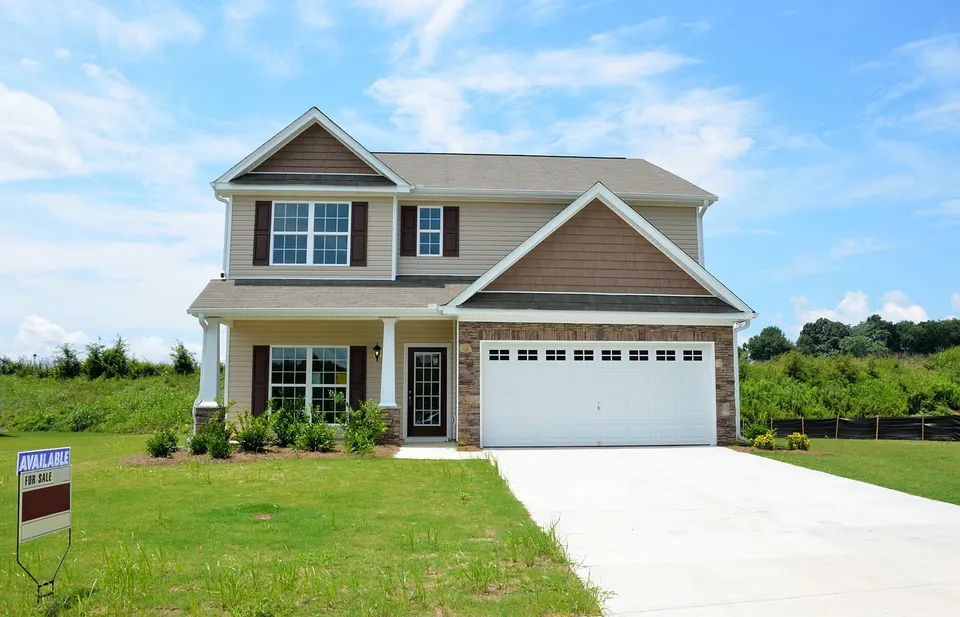
Two documents published on 28 October pull in opposite directions for first-time buyers. In the Budget, Chancellor John Healey put £4.7bn of government-backed lending behind Your First Home, a new equity loan for first-time buyers in England that is due to open next spring. The same afternoon, the Office for Budget Responsibility’s October 2026 Economic and fiscal outlook forecast that mortgage payments will take a bigger share of household income than at any point since 2009.
The government is making it easier to get on the ladder with a small deposit at a time when its own forecaster expects the cost of staying on that ladder to keep going up. For anyone weighing up the scheme, both facts need to be read together.
How Your First Home is built
The government first announced the scheme on 26 September 2026, and the Budget confirmed it. The structure is close to the old Help to Buy equity loan. The buyer puts down a deposit of between 2.5% and 15%. The government lends 20% of the purchase price as an equity loan, and a repayment mortgage covers the rest. On the minimum deposit, the mortgage would be 77.5% of the price.
According to Rightmove’s summary of the published terms, the equity loan charges no interest for five years. Interest is 1.5% in year six and 3% from year seven. These interest payments sit on top of the mortgage payment and do not reduce what is owed on the equity loan.
The scheme is narrowly targeted:
- Who qualifies. First-time buyers only. Healey pitched it at buyers who do not have family money to draw on. Households earning more than £110,000 combined outside London, or £140,000 in London, are excluded.
- Which homes. Only new builds from developers that have signed up. Local price caps, published this week, run from £215,000 to £650,000, with an average of £361,250 across England’s 296 local authorities. South Tyneside has the lowest cap. Fourteen London boroughs share the highest.
- When. Applications are expected to open in February 2027.
- Developer costs. Participating builders pay a fee on each sale. It is 1% on their first 100 homes sold through the scheme each year, 3% on homes 101 to 250, and 4% above that.
Ministers say the funding should help about 70,000 households. Zoopla has estimated up to 30,000 buyers a year, at a cost of roughly £1.5bn a year. On that estimate, the £4.7bn would last about three years.
The OBR’s affordability warning
The OBR forecast is the other side of the picture. It expects the average effective interest rate on outstanding mortgages to rise from 4% in 2026 to about 5% by 2031, as borrowers come off cheaper fixed deals. On that path, mortgage payments would reach 4.25% of household disposable income by 2031. That would be the highest share since 2009 and more than double the 2% recorded in 2021.
4.25% looks small, but it is an economy-wide average. It includes renters and outright owners, who pay no mortgage at all, so for a household that has just bought, the share of income going on the mortgage is far larger. What matters is the direction. The OBR also cut its forecast for housing transactions by 4% compared with its March forecast, blaming higher mortgage rates and slower growth in the housing stock.
Rates near 6% and a stalling market
Current pricing supports that outlook. Moneyfacts put the average two-year fix at 5.97% on 27 October, up from 5.92% a month earlier. It was still at 5.97% in figures reported on 4 November. That is the highest level since December 2023 and well above January’s 4.83%. Moneyfacts calculates that a £250,000 mortgage over 25 years now costs £169 a month more than it would have at the start of the year.
Demand has weakened too. In the RICS survey for September, published on 8 October, new buyer enquiries fell to a net balance of minus 22%. RICS linked the fall to expectations of higher interest rates. Nationwide’s annual house price growth slowed to 0.8% in September.
The scheme does change the rate a buyer can get. A 77.5% mortgage usually costs less than a 95% mortgage, because lenders charge less when they lend a smaller share of the price. That is the main financial attraction of the scheme. But it does not change the rate environment. Anyone who buys in 2027 will refinance their mortgage into whatever market exists two or five years later, which is the period the OBR expects to be more expensive.
What an equity loan actually costs
An equity loan is not a grant, and it is not a fixed debt either. The government’s share rises and falls with the value of the home. Under the predecessor Help to Buy scheme, repayments are based on the market value of the home when the buyer repays. A sale is repaid at the market value or the agreed price, whichever is higher. The whole loan must be repaid on sale or at the end of the term, which is normally 25 years. Administration fees apply to remortgages and partial repayments. Your First Home is expected to work in a broadly similar way, but the full contract terms have not yet been published.
A worked example, assuming the same mechanics. Take a £300,000 new build bought on the minimum deposit:
- the buyer puts in £7,500 and borrows £232,500 on a mortgage
- the government lends £60,000
- if the home is worth £330,000 when it is sold, the government’s 20% share is £66,000
- if the home is worth £270,000, the government’s share falls to £54,000, but most of the loss still falls on the buyer’s mortgage and small deposit
- at the stated rates, interest is £900 in year six and £1,800 a year from year seven, none of which reduces the £60,000 owed
Help to Buy also shows how these costs can grow over time. On that scheme, interest went up each year in line with inflation, and the government’s guidance says plainly that keeping the loan longer means paying more interest. Your First Home has been described with a 3% rate from year seven. Whether that rate stays fixed or is later linked to inflation is something the final terms need to make clear.
There are other risks:
- Paying more for a new build. New builds often sell for more than equivalent older homes and can lose value faster in the first few years. With only 2.5% of the buyer’s own money in the property, a modest fall in value could leave the buyer in negative equity.
- Developer fees. Critics argue that builders may pass the cost of joining the scheme on to buyers through higher prices.
- Fewer homes to choose from. The price caps limit which homes qualify, and only signed-up developers can take part.
- Refinancing. Paying off the government’s share later usually means borrowing more on the mortgage, at whatever rates apply at the time.
What buyers should check
These are points to understand, not reasons to use or avoid the scheme. The full eligibility rules and loan contract are due before applications open. They should answer:
- how the government’s share is valued when the loan is repaid, and who pays for the valuation
- whether interest from year seven is fixed at 3% or linked to inflation
- what fees apply to remortgaging, partial repayment or selling
- whether the buyer could still afford the combined mortgage and equity loan interest payments if they had to refinance at today’s average rates of nearly 6%
- what the price of a qualifying new build is compared with similar older homes nearby
Equity loans are secured on the home. As with any mortgage, a buyer who cannot keep up with payments could have the property repossessed.
What to watch next
The next steps are the full scheme terms, the list of participating lenders and developers, and February’s application window. Interest rates are the other variable. Lenders spent October pricing in an expected Bank of England rate rise, and where the Bank sets rates will decide whether the OBR’s forecast turns out to be cautious or optimistic. The scheme helps with the size of the deposit. It does not lower the cost of a mortgage.
Sources
- Autumn Budget 2026: Your First Home scheme confirmed, The Intermediary, 2026-10-28
- Budget 2026: Households earning over £110,000 locked out of revived Help to Buy scheme, City AM, 2026-10-28
- Healey announces £4.7bn for Your First Home scheme, Building, 2026-10-29
- Your First Home scheme: how it works for first-time buyers, Rightmove, 2026-10-29
- New First-Time Buyer Scheme: Your First Home FAQs, Setfords, 2026-10-29
- Your First Home price caps revealed ranging from £215,000 to £650,000, Today's Conveyancer, 2026-11-04
- Healey Unveils £4.7bn Your First Home Scheme for First-Time Buyers, Brit Brief, 2026-10-28
- Economic and fiscal outlook: October 2026, Office for Budget Responsibility, 2026-10-28
- Mortgage payments as proportion of disposable income to hit highest level since 2009, Mortgage Strategy, 2026-10-28
- Autumn Budget 2026: OBR expects mortgage payments to reach highest share of disposable income since 2009, Mortgage Solutions, 2026-10-28
- Average new mortgage rate rises to 5.88% ahead of Budget, Moneyfacts data shows, Mortgage Strategy, 2026-10-28
- Mortgage rates hit three-year high as lenders reprice aggressively ahead of base rate rise, Mortgage Professional Australia UK (MPA), 2026-11-04
- More homes for sale, fewer buyers: RICS September 2026, Valuq, 2026-10-13
- Help to Buy: Equity Loan, GOV.UK, 2026-11-05
- Paying interest on your Help to Buy: Equity Loan, GOV.UK, 2026-11-05
More in Property & Mortgages
- Sellers cut asking prices faster than usual as Bank Rate rises to 4%
Rightmove's November index shows sellers cutting asking prices faster than usual as mortgage rates rise and stock hits a 12-year high, with flats hit hardest.
- House prices fall 0.6% as fixes near 6% squeeze equity and borrowing power
Lloyds says prices fell 0.6% in October, a day after Bank Rate rose. With fixes near 6%, thinner equity and smaller loans now meet at remortgage time.
- Lifetime ISA savers buying above £450,000 now keep their own money
Lifetime ISA savers buying above £450,000 now pay a 20% charge, not 25%. The First Time Buyer ISA arrives in 2029, but existing accounts carry on.
- House prices stall at 0.5% growth as average fixed mortgage rates sit near 6%
Nationwide says annual price growth slowed to 0.5% in October as average fixes sat near 6%. What that means for remortgagers, first-time buyers and sellers.
- Why buying a home in England and Wales still takes four months, and whether technology can fix it
Purchases take about 120 days from offer to completion and one in three fails. What causes the delay, what the 2026 reforms change, and where blockchain went.

Related reading

How mortgages work in the UK: a 2026 guide for borrowers
How UK mortgages work in 2026: repayment and interest-only loans, fixed and variable rates, what lenders check, and what borrowing costs at today's rates.

Blockchain and UK mortgages in 2026: what is actually speeding up the process
Blockchain was supposed to transform mortgages. In 2026 the real gains come from digital signatures, Land Registry automation and the home buying reform plan.

Income tax take jumps as frozen thresholds meet rising pay
October's public finances show income taxes up 13.6% on a year earlier while pay grew 3.5%. How frozen thresholds drive that gap, and who feels it most.