
House prices stall at 0.5% growth as average fixed mortgage rates sit near 6%
Nationwide says annual price growth slowed to 0.5% in October as average fixes sat near 6%. What that means for remortgagers, first-time buyers and sellers.
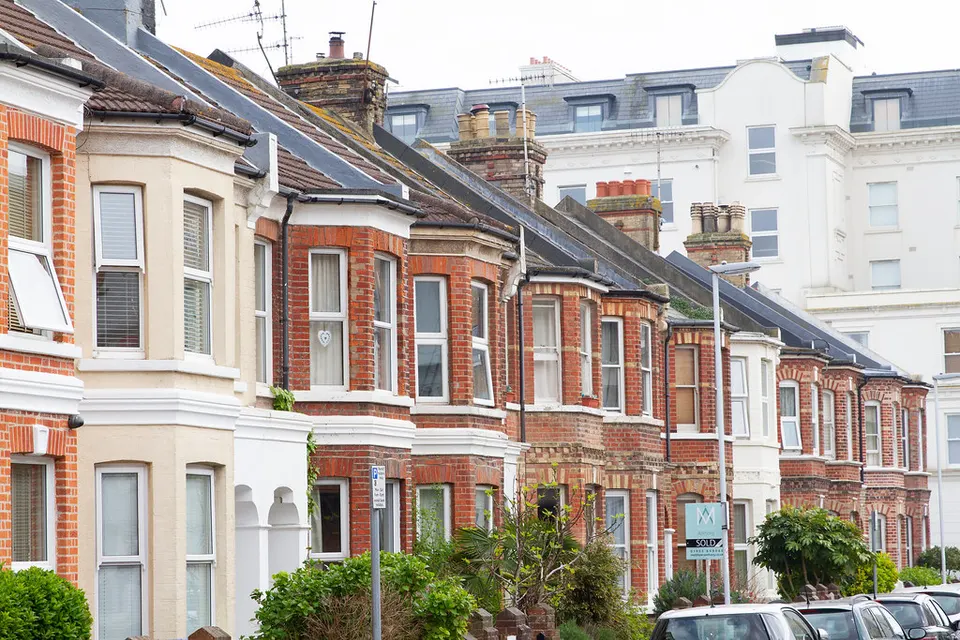
House prices across the UK have stopped rising in any meaningful way, and the cost of borrowing to buy them has gone the other way. Nationwide’s October index, published on 30 October, showed annual growth easing to 0.5%, the slowest since January 2024, with prices unchanged on the month. Then on 4 November, Moneyfacts data put the average two-year fix at 5.96% and the average five-year fix at 5.99%.
The two figures together explain why this autumn is hard for almost anyone with a mortgage decision to make. Falling or flat prices usually help buyers. This time, rising rates are taking back more than the price slowdown gives.
What Nationwide’s figures show
Before seasonal adjustment, the typical UK home cost £273,566 in October, down from £274,251 in September and £278,880 in April. The market has now been stuck for six months and sits close to 2% under its spring high. Comparing the latest three months with the three before, prices fell 0.2%.
The index is built from Nationwide’s own mortgage approvals, so it leaves out cash purchases. Even so, other measures point the same way. Knight Frank’s Tom Bill noted that both main house price indices are close to zero and that mortgage approvals are running almost a fifth below last year, and he linked the weakness to the Middle East conflict.
Robert Gardner, Nationwide’s chief economist, put the slowdown down to higher mortgage rates and affordability limits squeezing what buyers can or will pay. Trade press coverage of the release also pointed to geopolitical tension, energy costs and growing expectations of further Bank Rate rises as the main weights on the market.
Fixed rates at a three-year high
The rate side of the picture has moved fast. Moneyfacts’ monthly analysis, published on 4 November, found that the average two-year fix had risen from 4.83% in January to 5.97%, its highest level since December 2023. The cheapest two-year deals from Barclays, HSBC, Lloyds Bank, NatWest and Santander were still 0.44 percentage points higher on average than at the start of September. Moneyfacts’ weekly snapshot on the same day was a basis point lower, at 5.96%.
Moneyfacts has attributed the rise to lenders repricing as swap rates swing about. Swap rates, which lenders use to price fixed deals, have climbed as markets dropped their expectation of rate cuts and began betting on rises instead. Bank Rate itself has been 3.75% since December 2025. In September the Monetary Policy Committee voted six to three to hold, with three members favouring a rise to 4%. Ahead of the 5 November decision, economists polled by Reuters expected a seven to two vote for a quarter-point rise to 4%, which would be the first increase since August 2023.
Gardner made a point that matters to fixed-rate borrowers. Two-year and five-year swap rates had already priced in a November rise, so the move itself should do little to fixed mortgage pricing, and he expected a fairly modest immediate effect on swaps. The rise has mostly reached fixed rates already. What happens next to deals depends on where markets think Bank Rate goes in 2027.
Remortgaging: the jump from 2024 deals
The rise is clearest for borrowers whose two-year fix is ending now. Moneyfacts figures show the average two-year fix was 5.39% at the start of November 2024, against 5.97% on 2 November 2026. Many expected rates to be lower by the time they refinanced. Instead they are higher.
Take a £250,000 repayment mortgage over 25 years. At 5.39% it costs about £1,519 a month, and at 5.97% about £1,606. That is roughly £87 a month more on standard repayment arithmetic. Moneyfacts’ own example from early October came out in the same place: about £1,605 a month at 5.96%, £165 more than at February’s average of 4.85%. For people coming off five-year deals taken out when rates were far lower, the gap is bigger again, a point Moneyfacts has made about those rolling off five-year fixes.
Flat house prices add a second, quieter pressure. Loan-to-value bands decide which rates a borrower can get. A borrower who has paid down little capital since spring, in a market almost 2% below its April level, may be closer to the edge of a band than they assumed. Averages also hide a lot: someone with a large equity cushion will usually be offered something quite different from the headline figure.
First-time buyers: lower prices, higher payments
On paper, softer prices help people buying their first home. In practice the numbers do not balance. Imagine a buyer paying October’s average of £273,566 with a 10% deposit, borrowing about £246,200 over 25 years. At January’s average two-year rate of 4.83%, the repayment works out at around £1,415 a month. At 5.97% it is about £1,582. That is roughly £167 a month more for the same home.
Over the same period the price drop since April, about £5,300, saves this buyer around £530 on the deposit and cuts the monthly payment by only about £31. The higher rate costs more than five times what the lower price saves. These are illustrative averages. Higher loan-to-value products are usually priced above the market-wide figure, so actual costs for buyers with small deposits can be steeper. Lenders’ affordability tests, which are run at the rate being charged, will also allow smaller loans than they did in January.
Sellers: buyers now set the terms
For anyone selling, the message from Nationwide is blunt. Gardner said the continued slowdown suggests buyers who have to move are price sensitive and negotiating hard. Surveyors are reporting weak new buyer enquiries, and households grew less optimistic in October about the economy and their own finances.
Fewer buyers, all facing higher payments, leaves sellers with less room to push on price. Buyers’ budgets are capped by the rate they can get, not just by what they want to spend. Asking prices set with spring in mind may not hold up against that.
What to watch next
The first signal is what the Bank of England said about the path beyond November, which came in its Monetary Policy Report alongside the 5 November decision. The next announcement is on 17 December. Gardner has noted that markets are pricing Bank Rate heading towards 5% over the next year or so, but he doubts it will need to rise that far. He pointed to the Bank’s view that part of the move in futures reflects risk premia rather than a firm forecast. If energy prices ease, swap rates could fall back and give fixed-rate pricing some relief.
Moneyfacts has said fixed rates could edge down before the year ends if the committee signals a calmer path, because some lenders may have overreacted to swap moves. Gardner also argues the market should pick up again once the energy price shock fades.
Neither of those is guaranteed. Both depend on events in the Middle East and on inflation data that no lender controls. For now, the October figures show a market where prices have stopped rising but the cost of buying has kept going up.
Sources
- Annual house price growth slows again in October, Nationwide Building Society, 2026-10-30
- UK house prices flat in October as rate rise bets weigh, Nationwide says, Investing.com via Yahoo Finance, 2026-10-30
- House price growth slows to 0.5% in October, The Intermediary, 2026-10-30
- House price growth at weakest in nearly three years, Mortgage Solutions, 2026-10-30
- Nationwide chief economist: fundamentals in place for house price recovery, Mortgage Professional (MPA), 2026-10-30
- BoE preview: what anticipated rate rise means for mortgages, Mortgage Professional (MPA), 2026-11-04
- Mortgage rates hit three-year high with bank rate rise expected: Moneyfacts, Mortgage Strategy, 2026-11-04
- UK interest rates: Bank of England expected to raise them for first time in over three years, News Beep, 2026-11-05
- Average fixed rates now on brink of 6%: Moneyfacts, Mortgage Strategy, 2026-10-02
- Mortgage rate predictions 2026, HomeOwners Alliance, 2026-11-03
- Monetary Policy Summary and minutes, September 2026, Bank of England, 2026-09-17
- Monetary Policy Committee dates for 2026 and 2027, Bank of England, 2026-09-21
- Bank of England set to hike rates for 1st time in 3 years, RTÉ, 2026-11-05
More in Property & Mortgages
- Sellers cut asking prices faster than usual as Bank Rate rises to 4%
Rightmove's November index shows sellers cutting asking prices faster than usual as mortgage rates rise and stock hits a 12-year high, with flats hit hardest.
- House prices fall 0.6% as fixes near 6% squeeze equity and borrowing power
Lloyds says prices fell 0.6% in October, a day after Bank Rate rose. With fixes near 6%, thinner equity and smaller loans now meet at remortgage time.
- Lifetime ISA savers buying above £450,000 now keep their own money
Lifetime ISA savers buying above £450,000 now pay a 20% charge, not 25%. The First Time Buyer ISA arrives in 2029, but existing accounts carry on.
- Your First Home equity loans get £4.7bn as the OBR warns mortgage costs will climb
The Budget put £4.7bn behind Your First Home equity loans just as the OBR forecast mortgage payments taking their biggest income share since 2009.
- Why buying a home in England and Wales still takes four months, and whether technology can fix it
Purchases take about 120 days from offer to completion and one in three fails. What causes the delay, what the 2026 reforms change, and where blockchain went.





Related reading

How mortgages work in the UK: a 2026 guide for borrowers
How UK mortgages work in 2026: repayment and interest-only loans, fixed and variable rates, what lenders check, and what borrowing costs at today's rates.

Blockchain and UK mortgages in 2026: what is actually speeding up the process
Blockchain was supposed to transform mortgages. In 2026 the real gains come from digital signatures, Land Registry automation and the home buying reform plan.

Income tax take jumps as frozen thresholds meet rising pay
October's public finances show income taxes up 13.6% on a year earlier while pay grew 3.5%. How frozen thresholds drive that gap, and who feels it most.